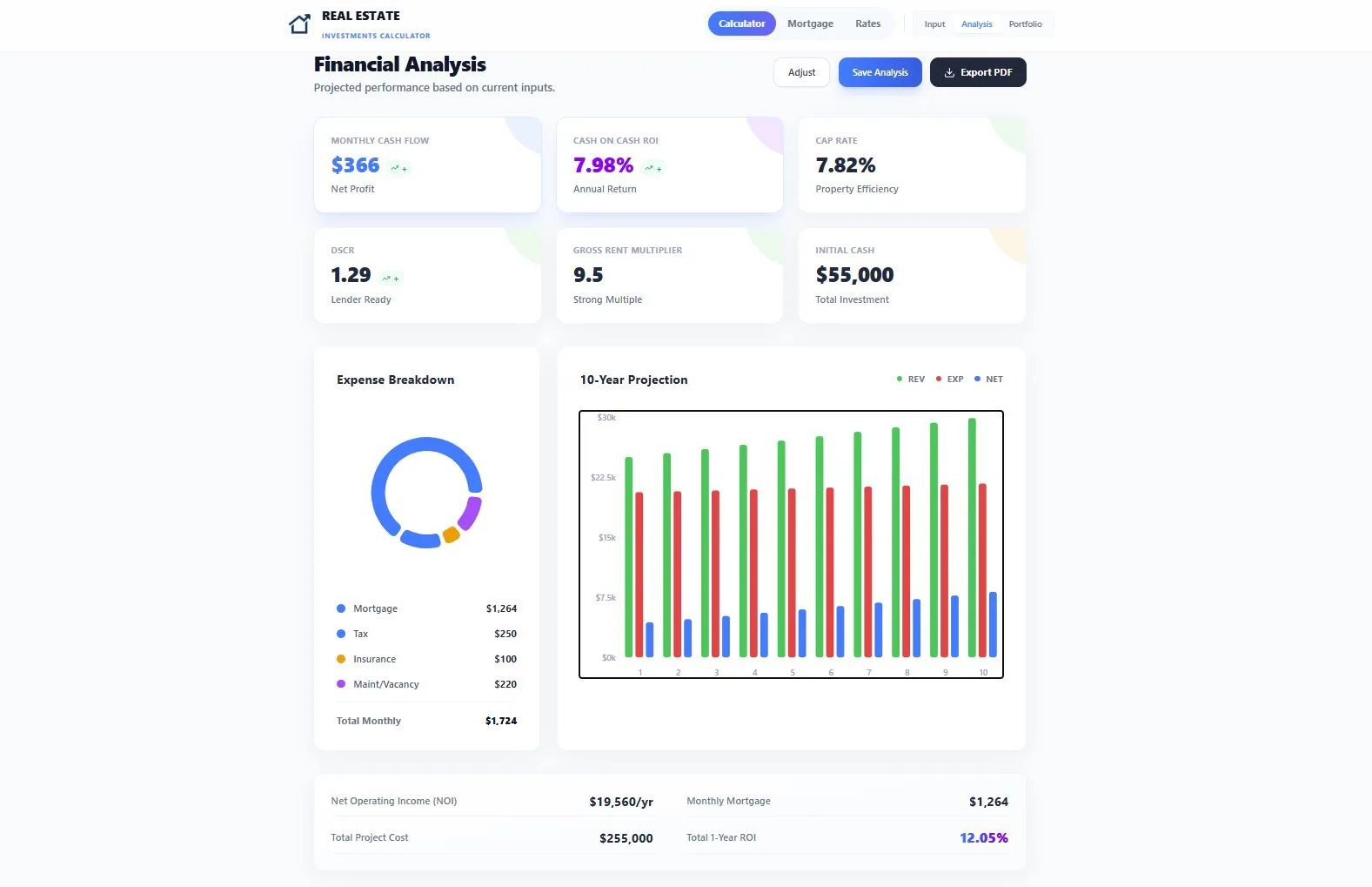

Investor clients don't fall in love with a kitchen backsplash. They fall in love with returns. If you want to win — and keep — investor listings, you have to speak their language before the property ever hits the MLS.
Investors transact far more often than the average homeowner, they refer other investors, and they make faster decisions when the numbers are in front of them. The agents who earn that business are the ones who can look at a rental and quickly answer the only question an investor really asks: "Does this deal make money?"
You don't need to be a CPA. You just need a repeatable way to run the numbers. Here's the framework I use before taking any investment property to market.
Why Listing Agents Should Analyze the Numbers First
When you understand a property's financials, three things happen:
- You price the listing correctly, because you know what an investor can actually pay and still hit their target return.
- You market to the right buyers, leading with cash flow and cap rate instead of countertops.
- You win repeat business, because investors keep the agent who helps them evaluate deals quickly.
The good news: you can get every number below in a couple of minutes with a free real estate investment calculator. Enter the price, rent, and expenses, and it returns cash flow, cap rate, and ROI instantly — no spreadsheet required.
Step 1: Estimate Realistic Rental Income
Everything starts with rent. Pull comparable rentals in the immediate area, not just active listings but recently leased units, and be conservative. Then account for two things new agents often skip:
- Vacancy rate. No rental is occupied 100% of the time. A 5–8% vacancy assumption is realistic in most markets.
- Other income. Parking, storage, laundry, or pet rent can add meaningfully to the total.
Your effective rental income — gross rent minus vacancy — is the foundation for every other number.
Step 2: Add Up the Operating Expenses
This is where deals quietly fall apart. Operating expenses include everything it costs to run the property except the mortgage:
- Property taxes
- Insurance
- HOA / condo fees
- Maintenance & repairs
- Property management
- Utilities (if owner-paid)
- CapEx reserves
- Vacancy allowance
Rental income minus these operating expenses gives you Net Operating Income (NOI) — the single most important number for valuing an income property.
Step 3: Calculate the Cap Rate
Cap rate tells an investor what unleveraged return the property produces at a given price. The formula is simple:
Cap Rate = Net Operating Income ÷ Purchase Price
A $250,000 property with $17,500 in NOI has a 7% cap rate. Whether that's "good" depends entirely on the market — investors compare it to other deals and to prevailing rates. When you're pricing a listing, working the cap rate backward tells you the price that will attract offers. Run a few scenarios quickly with a free cap rate and cash flow tool so you walk into the listing appointment with numbers, not guesses.
Free Tool
Run the numbers in 2 minutes
Enter price, rent, and expenses to get cash flow, cap rate, and ROI instantly — no spreadsheet required.
Step 4: Factor in Financing and Cash Flow
Cap rate ignores the loan. Cash flow doesn't. Once you layer in a mortgage — down payment, interest rate, and term — you can show an investor what actually lands in their pocket each month.
Because rates move constantly, model the monthly payment with a current mortgage payment calculator and then subtract it from NOI to get monthly cash flow. Positive cash flow is what most buy-and-hold investors are chasing.
Pro tip: Investors care about cash-on-cash return — annual cash flow divided by the cash they actually invested (down payment plus closing and repair costs). It's often more persuasive than cap rate because it reflects their real out-of-pocket return.
Step 5: Match the Analysis to the Investor's Strategy
Not every investor client wants a long-term rental. Tailor your numbers to their playbook:
Buy & Hold
Lead with cap rate, cash flow, and cash-on-cash return.
BRRRR (Buy, Rehab, Rent, Refinance, Repeat)
Focus on after-repair value and refinance proceeds. A BRRRR calculator shows how much capital they can pull back out.
Fix & Flip
It's all about margin. A flip profit calculator weighs purchase price, rehab, holding, and selling costs against resale value.
When you can produce the right analysis for each strategy on the spot, you stop being just a listing agent and become the investor's go-to partner.
Step 6: Present the Property So It Actually Sells
Strong numbers get investors to the table, but presentation closes the gap — especially since so many investment properties are listed vacant. Empty rooms photograph cold and make it harder for owner-occupant buyers (and even investors picturing a future tenant) to connect with the space.
This is where AI virtual staging earns its keep. Upload a photo of an empty unit, choose a style, and generate professionally staged listing images in minutes — for a fraction of the cost of physical staging. It widens your buyer pool and supports a stronger price without a furniture rental invoice. Just remember to disclose staged images per MLS rules; StageVibe burns a "VIRTUALLY STAGED" watermark right into the image so you stay compliant.
And when you host the open house, capture every investor who walks through with a digital open house sign-in sheet so no lead slips away.
Your Pre-Listing Analysis Checklist
- Estimate realistic rent from leased comps, minus vacancy
- Total all operating expenses to find NOI
- Calculate the cap rate at your proposed price
- Model financing to show monthly cash flow and cash-on-cash return
- Tailor the numbers to the investor's strategy (hold, BRRRR, flip)
- Stage and market the property to widen the buyer pool
Run through this before every investment listing and you'll price sharper, market smarter, and become the agent investors call first. Start by running the numbers on your next deal, then stage it to sell.
Frequently Asked Questions
Why should a listing agent analyze the numbers on a rental property?
Investor clients buy and sell based on returns, not curb appeal. When you can speak to cash flow, cap rate, and ROI, you price the listing correctly, market it to the right buyers, and earn repeat business from investors who transact far more often than typical homeowners.
What is a cap rate and how do you calculate it?
Cap rate is annual net operating income divided by the property's price or value, expressed as a percentage. NOI is rental income minus all operating expenses, excluding the mortgage. A free cap rate calculator lets you enter rent, vacancy, taxes, insurance, and maintenance to get the figure instantly.
What numbers do investor buyers care about most?
The four that matter most are monthly cash flow, cap rate, cash-on-cash return, and total ROI. Having these ready in your listing marketing helps investors evaluate the deal faster and makes your listing stand out.
Can virtual staging help sell an investment property?
Yes. Many investment properties are listed vacant. AI virtual staging helps buyers picture the space, which can widen the buyer pool and support a stronger price. Virtually staged images should always be clearly disclosed per MLS rules.
Win the listing, then market it like a pro — stage vacant rooms in under 60 seconds
Try StageVibe Virtual Staging Free